
Greek Vase Patterns
Greek Vase Patterns - Not only were they practical objects from the time, but they also offer insight into the artistic developments, religion, and political beliefs of. Web typology of greek vase shapes. Web learn more about greek pottery using vase templates and sherds from the museum's collection to design your own vase. 400 bce provides not only some of the most distinctive vase shapes from antiquity but also some of the oldest and most diverse representations of the cultural beliefs and practices of the ancient greeks. Web a collecting guide to ancient greek vases, from kraters and kylikes to condition and clay colour, illustrated with lots offered at christie's. Web how to read greek vases. They wrote and acted out plays, composed music, recited epic stories, wrote poems, created sculptures, and painted pictures. Styles such as west slope ware were characteristic of the subsequent hellenistic period, which saw vase painting's decline. Why do we call it the key pattern? In fact, there are many reports from the time about how wonderful and realistic their paintings were. In fact, there are many reports from the time about how wonderful and realistic their paintings were. Find out what is an amphora, a krater and the most usal ancient greek vases. Lotus, palmettes, ivy, meander, rays, tongues and rosettes were the most popular. A nolan amphora, a type with a longer and narrower neck than usual, from nola. The motif was employed with abundance across temples and monuments in ancient greece as much as it was on domestic pots and vases. Styles such as west slope ware were characteristic of the subsequent hellenistic period, which saw vase painting's decline. Web greek pottery was manufactured in a variety of different shapes and sizes according to the use to which a particular vessel would be put. Web the system of names used today for greek vases has quite rightly been described by one leading scholar as 'chaotic'. Web a basic guide to ancient greek pottery shapes. Two of the most widely used patterns are shown here: Bodies and limbs were represented by triangles. Not only did the pots have to be stacked in the kiln in a specific manner, but the conditions inside had to be precise. In fact, there are many reports from the time about how wonderful and realistic their paintings were. Web greek pottery was manufactured in a variety of different shapes and. Lotus, palmettes, ivy, meander, rays, tongues and rosettes were the most popular. Many of the names were first applied in the eighteenth and nineteenth centuries by scholars who tried to fit the names of pots that they knew from greek and latin literature or inscriptions to the pieces then surfacing from. The motif was employed with abundance across temples and. 400 bce provides not only some of the most distinctive vase shapes from antiquity but also some of the oldest and most diverse representations of the cultural beliefs and practices of the ancient greeks. This title is in print. Choose one of three pottery shapes then draw and decorate your own vase inspired by greek pottery. Web the pottery of. Greek key pattern egg and dart pattern Not only did the pots have to be stacked in the kiln in a specific manner, but the conditions inside had to be precise. Choose one of three pottery shapes then draw and decorate your own vase inspired by greek pottery. Bodies and limbs were represented by triangles. Web made of terracotta (fired. Decorate the vase below with a picture that will tell people in the future what life was like in the 21st century! For specific treatments of the major physical types of greek pottery, see alabastron; Find out what is an amphora, a krater and the most usal ancient greek vases. Styles such as west slope ware were characteristic of the. Choose one of three pottery shapes then draw and decorate your own vase inspired by greek pottery. In fact, there are many reports from the time about how wonderful and realistic their paintings were. Not only did the pots have to be stacked in the kiln in a specific manner, but the conditions inside had to be precise. Web typology. Web how to read greek vases. The ancient greeks were great artists. They wrote and acted out plays, composed music, recited epic stories, wrote poems, created sculptures, and painted pictures. Attic komast cup, a variety of kylix, louvre. A nolan amphora, a type with a longer and narrower neck than usual, from nola. Web the pottery of ancient greece from c. Web pictures on ancient greek vases give us a clue to what life might have been like over 2000 years ago. Web greek pottery was manufactured in a variety of different shapes and sizes according to the use to which a particular vessel would be put. Not only were they practical objects. Web briefly, ancient greek vases display several painting techniques, and these are often period specific. The ancient greeks were great artists. Decorate the vase below with a picture that will tell people in the future what life was like in the 21st century! Web made of terracotta (fired clay), ancient greek pots and cups, or “vases” as they are normally. Web pictures on ancient greek vases give us a clue to what life might have been like over 2000 years ago. Web the system of names used today for greek vases has quite rightly been described by one leading scholar as 'chaotic'. A guide to terms, styles, and techniques. Web common greek vase patterns include the meander, the swastika, triangles,. Lotus, palmettes, ivy, meander, rays, tongues and rosettes were the most popular. A nolan amphora, a type with a longer and narrower neck than usual, from nola. Many of the names were first applied in the eighteenth and nineteenth centuries by scholars who tried to fit the names of pots that they knew from greek and latin literature or inscriptions to the pieces then surfacing from. Not only did the pots have to be stacked in the kiln in a specific manner, but the conditions inside had to be precise. Web the pottery of ancient greece from c. Web learn more about greek pottery using vase templates and sherds from the museum's collection to design your own vase. The ancient greeks were great artists. Web greek pottery was manufactured in a variety of different shapes and sizes according to the use to which a particular vessel would be put. Thousand of brush strokes were applied to cover the entire surface of the vase with figures, rosettes, meanders, cross hatching and spirals. In fact, there are many reports from the time about how wonderful and realistic their paintings were. The motif was employed with abundance across temples and monuments in ancient greece as much as it was on domestic pots and vases. Two of the most widely used patterns are shown here: Choose one of three pottery shapes then draw and decorate your own vase inspired by greek pottery. Web the geometric greek pottery style was characterized by deep symbolism. 400 bce provides not only some of the most distinctive vase shapes from antiquity but also some of the oldest and most diverse representations of the cultural beliefs and practices of the ancient greeks. Greek key pattern egg and dart pattern
Greek Amphora Vase Geometric Pattern The Getty Store
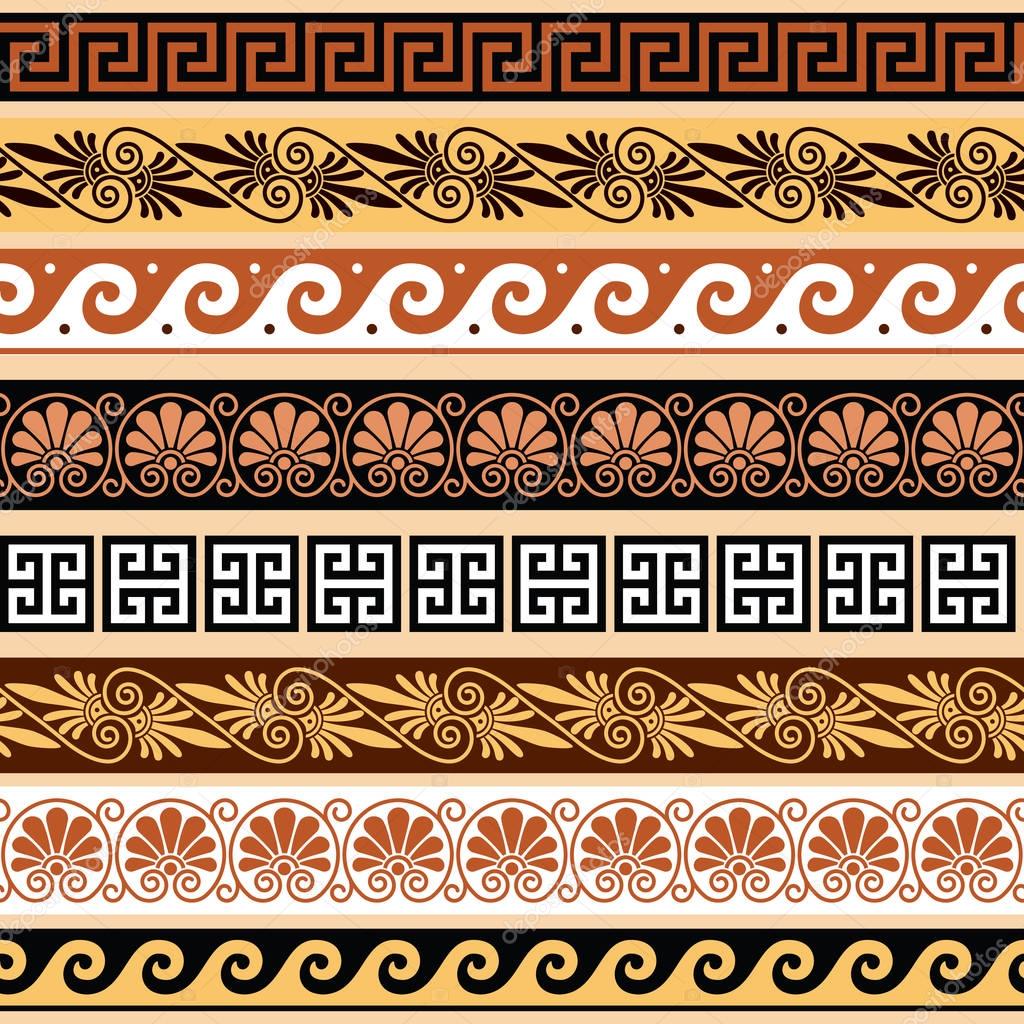
Ancient Greek Patterns On Vases

Greek Pattern Vector Seamless Design, Ancient Vase Waves Decoration in

Αποτέλεσμα εικόνας για ancient greek vase shapes כדים יווניים
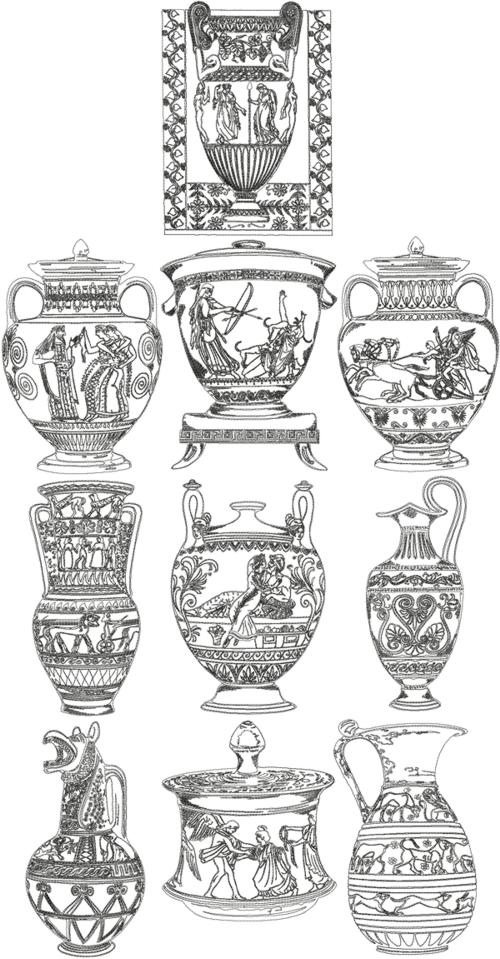
Ancient Greek Vase Patterns

Ancient Pottery Designs
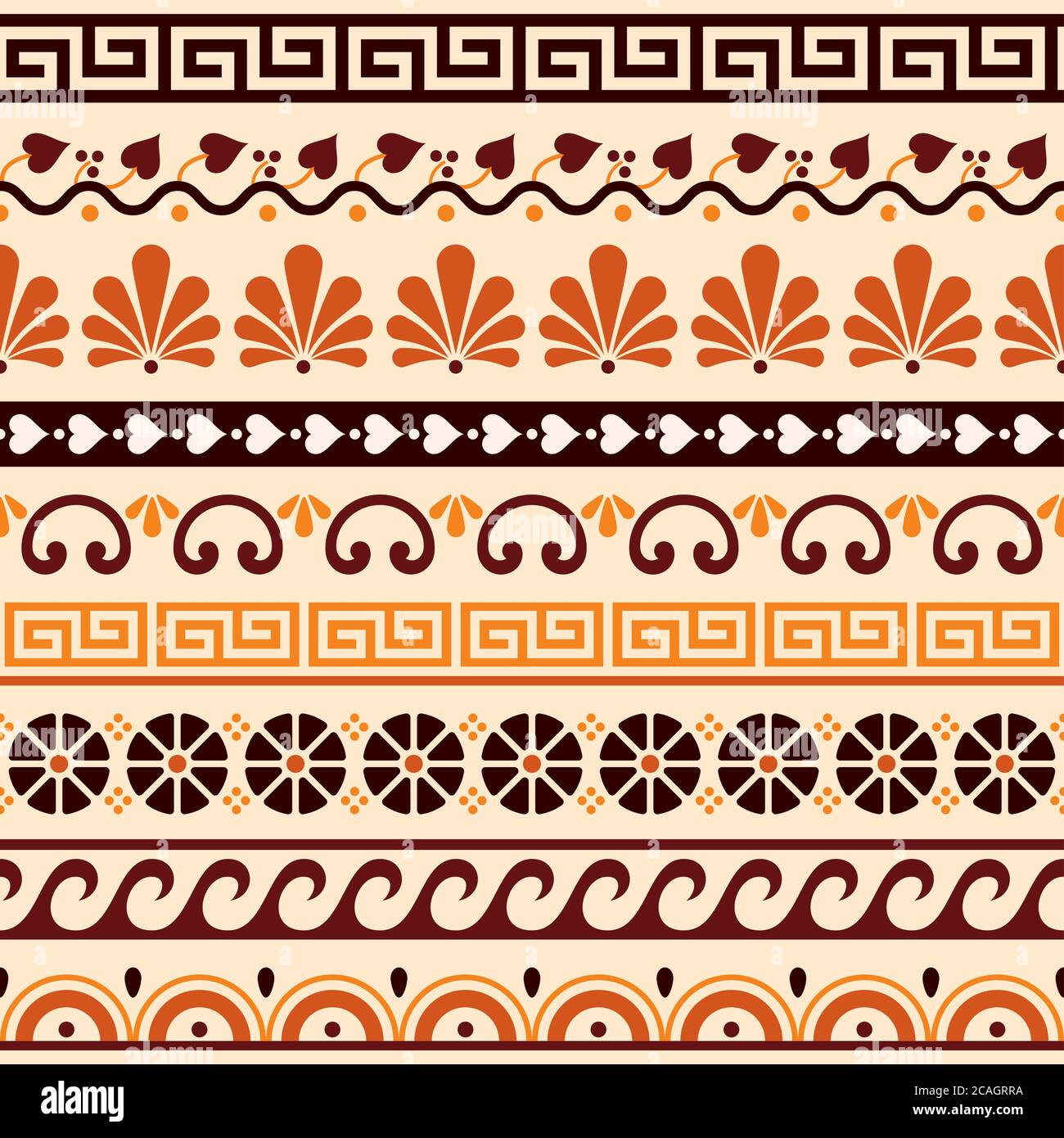
Greek key pattern, waves and geometric seamless vector design set

Ancient Greek Patterns On Vases

Ancient Greek Vase Patterns Pattern.rjuuc.edu.np

Ancient Greek Vase Patterns
Web Greek Vases, With Rich Iconography And Their Distinctive Decorative Style, Provide A Rare Look Into Life In Ancient Greece.
They Wrote And Acted Out Plays, Composed Music, Recited Epic Stories, Wrote Poems, Created Sculptures, And Painted Pictures.
Attic Komast Cup, A Variety Of Kylix, Louvre.
Web Made Of Terracotta (Fired Clay), Ancient Greek Pots And Cups, Or “Vases” As They Are Normally Called, Were Fashioned Into A Variety Of Shapes And Sizes (See Above), And Very Often A Vessel’s Form Correlates With Its Intended Function.
Related Post: